
Weeds + Shame + Organizational Culture
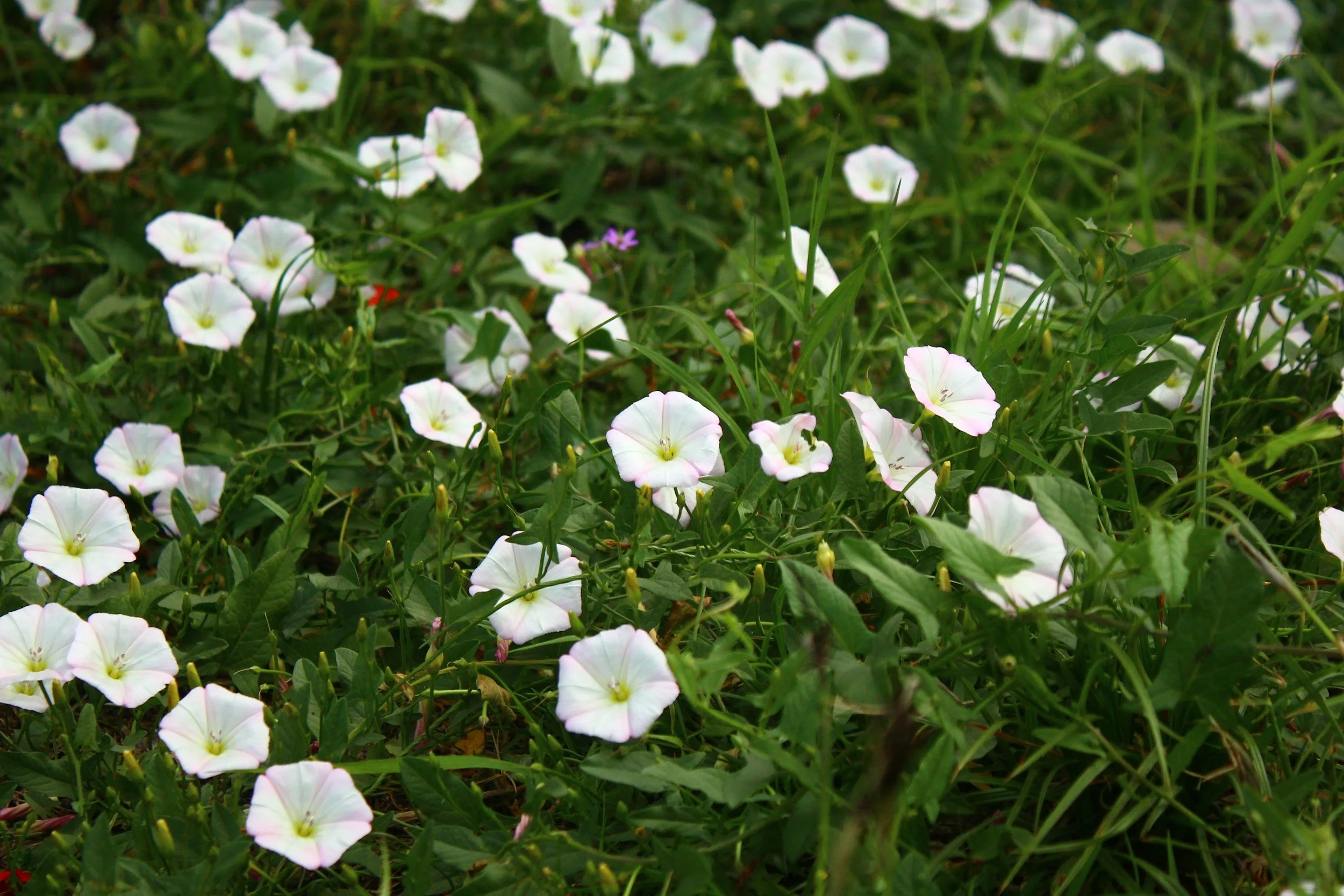
My name is Colleen, and I have a bindweed problem.
For most of the years we've lived here, I haven't had a particularly complicated relationship with bindweed. I don't want it. I pull it. It comes back. I pull it again. It comes back somewhere else. Occasionally I manage to follow one of those long white roots underground and feel an unreasonable amount of satisfaction when I pull out a particularly long section. Surely, this time I've gotten it.
Spoiler alert--I haven't.
Bindweed is incredibly persistent. It can grow roots many feet into the soil, survive drought, spread through disturbed ground, and store enough energy underground that removing everything we can see above the surface often doesn't do much to eliminate the plant.
I've always understood those characteristics as the reasons bindweed is such a nuisance. But as I’ve spent more time immersed in learning about soil, native grasslands, regenerative practices, and what the land around my own home might be able to teach me, I've started wondering if they are also information.
The bindweed growing on my property isn't making a judgment about where it should or shouldn't be. It is responding to the conditions that exist. Disturbed soil. Open space. Limited water. Competition. It has found a set of conditions in which it is remarkably well adapted to survive.
Now, in getting curious about bindweed, DOES NOT MEAN I suddenly want a yard full of bindweed. It doesn't mean that I stop pulling it or ignore the ways it can compete with the native grasses and wildflowers I'm trying to establish. But I'm becoming increasingly interested in what happens when I pause before immediately labeling something unwanted as a problem and ask a different question: What is this revealing about the conditions of the system?
And that question continues to grow between the layers of my work.
The weeds we find in ourselves
There are things about ourselves that many of us would happily pull out by the roots if we could. Maybe we procrastinate. Maybe we avoid conflict. Maybe we have trouble asking for help. Maybe we need to control the details. Maybe we shut down when things become overwhelming. For me, one of those things has been people pleasing.
I've written before about realizing how much of my professional identity had become connected to being needed. I liked being someone people could count on. I liked being helpful. I liked knowing that I could step in, solve a problem, take something off someone's plate, or make things a little easier for the people around me.
There is nothing inherently wrong with any of those things. The problem was that somewhere along the way, being helpful became tangled up with being valuable. If someone needed something, I wanted to be able to provide it. If someone was disappointed, frustrated, or uncomfortable, I felt some responsibility for making it better. Eventually, the same behavior that helped me feel successful was also contributing to my burnout.
Once I recognized that pattern, I wanted to change it. I wanted to set better boundaries, say no more easily, stop worrying so much about disappointing people, and quit taking responsibility for things that weren't actually mine to carry. And when I couldn't always do those things, or when I fell back into my old tendencies, there was often shame attached to it. I know I'm doing this. Why am I still doing it? Why can't I just stop?
Pull the weed. Find it again. Pull harder.
Somatic work has invited me into a different relationship with those patterns. Instead of immediately asking how to get rid of them, I can get curious about why they developed in the first place. What did being helpful provide for me? When did paying close attention to other people's needs help me feel connected or how did it make me more successful? What did my body learn about belonging, usefulness, conflict, or approval?
People pleasing didn't emerge because there was something fundamentally wrong with me. It was a response that made sense within certain conditions. At some point, it worked.
The work now isn't to shame myself for having developed the pattern. It is to notice why it is no longer serving me and begin creating the conditions where another response is possible.And that brings me back to the bindweed.
Organizations grow weeds, too
We are incredibly quick to identify unwanted behaviors in organizations. We have resistant employees, dysfunctional teams, territorial departments, ineffective managers, disengaged staff, chronic complainers, communication problems, accountability problems, culture problems.
Once we've named the problem, we usually start looking for a solution. We restructure a team. Hire a new leader. Create a performance plan. Offer professional development. Develop a communication strategy. Roll out a culture initiative.
Sometimes interventions are absolutely necessary. Understanding why harmful behavior exists doesn't mean accepting it. Just as learning about bindweed doesn't mean I need to surrender my yard to it, curiosity doesn't eliminate the need for boundaries or accountability.
But I wonder how often we try to remove the visible behavior without becoming curious about the conditions that allowed it to grow.
What if the employee who seems resistant to change has experienced four organizational initiatives in three years, none of which were ever fully implemented? What if the manager who hoards information learned that knowledge is one of the few ways to maintain power in an organization where roles are constantly shifting? What if the team that won't collaborate is working inside a system that talks about collaboration while rewarding individual performance? What if the employees who stay silent during meetings have learned, through experience, that speaking honestly carries consequences?
These behaviors may still need to change. But they are also telling us something. They are revealing the conditions the system currently provides. Culture is what grows in the conditions we create.
I've become fascinated by organizational culture through this lens because we often talk about culture as something leaders create by deciding what they want it to be. We name our values. Develop strategic priorities. Define leadership competencies. Write mission statements. Create culture committees. Take assessments that measure the growth or decline of company culture. But culture is also what grows, whether we intended to grow it or not.
An organization can say it values collaboration while creating competition for limited resources—time, money, people, etc. It can say it values innovation while punishing mistakes. It can say it cares about employee wellbeing while maintaining workloads that require people to work nights and weekends. It can ask for honest feedback while becoming defensive when people offer it. It can say that people are its greatest asset while treating rest as something employees are responsible for figuring out on their own time.
Eventually, people adapt to those conditions. They get quiet. They protect information. They stop taking risks. They disengage. They become territorial. They resist the next change before it has even begun.And then we point to those behaviors and say, We have a culture problem.Which may be true, but the problem may not be the behavior we can see. The behavior may be the bindweed.
What is the soil telling us?
One of the ideas that continues to emerge for me through working our land, is that regenerative work asks us to pay attention to conditions before rushing toward intervention.
Healthy ecosystems aren't created simply by removing everything we don't want. They are cultivated by understanding relationships: soil, water, roots, microorganisms, disturbance, climate, competition, diversity, time. Changing one thing changes other things. Organizations don’t have the same natural ecosystem components, but I think there is something important we can learn from thinking this way.
Instead of asking only, How do we stop this behavior?, we might also ask: What conditions make this behavior useful here? What gets rewarded in this organization? What gets punished? What can people safely talk about? What do people learn not to say? Where is there enough time, space, trust, or capacity? Where are people competing for resources? What has happened in this organization's history that people still carry with them? Those questions don't excuse behavior. They give us more information about what we are actually trying to change.
The same has been true for me in examining my own patterns. Understanding why I became a people pleaser doesn't mean I continue saying yes when I mean no. It gives me a different place from which to practice something new. Instead of starting from shame--Why am I still showing up this way?--I can start from curiosity: What is happening here? What am I protecting? What would allow me to respond differently?
Maybe that is the invitation for organizations, too. Before we pull the weed, perhaps we spend a little more time looking at the soil. Because the things we find most frustrating about ourselves, our teams, and our organizations may not simply be problems to eliminate. They may also be some of our clearest information about the conditions we've created. And if we want something different to grow, we might have to tend to those conditions first.
